Thursday, October 30, 2008

Essay #2

Prompt for Essay #2: 15% of final grade for course


FOR THIS ESSAY, YOU WILL CHOOSE EITHER OPTION #1 OR OPTION #2


OPTION #1: Argumentative Essay


REQUIREMENTS:

Length: A typed paper between 1200 and 1800 words.

Source material: All course material (readings, lecture, lecture sources, documentaries, etc.) from the September 30 class through the November 13 class

Due: Beginning of November 18th class.


It is important that your essay be entirely your own work, so please do not discuss the questions or your essay with anyone in the class. Please consult only with Jason if you have concerns and/or questions. Remember, I will look at first page drafts (see syllabus for more info), so be sure to take advantage of this opportunity.


The purpose of this assignment is to create a historical argument of your own. There are no right or wrong answers to these questions, only well-defended and poorly defended arguments. To make sure that you write a well-defended essay, first be certain that you assert a clear argumentative thesis (i.e. a position with which someone might disagree, but which you can prove to be correct). Second, make sure you offer lots of corroborating evidence. Imagine a reader who is deeply suspicious of your point of view, and then try to build an argument that will persuade even this skeptic. The most persuasive evidence is detailed and drawn from a variety of sources. This evidence will not simply be inserted and allowed to “speak for itself.” Rather, you will analyze the textual evidence in order to specifically detail how it helps to prove your argument. Finally, feel free to build on and cite the arguments I have made in class as well as the arguments of the historians you have read. However, do not repeat the arguments as your own. Engage with them only as they relate to the argument you are making.


On Source Citation: Use footnotes (these don’t count towards your word limit). I don’t really care about format, so long as the source of your quote or paraphrase is clear through the footnote. For reader documents just make sure I know the author, document, and reader page number of the particular quote cited. For lecture, date and lecture title is fine. For sources linked within lectures, this will most likely involve the website and a naming of the source. Ask me if you have any questions about this, but please to not obsess over this or other formatting issues.


QUESTIONS TO CONSIDER FOR OPTION #1:


Remember, I am looking for a coherent persuasive argument which incorporates evidence from the class. Moreover, the argument should be broad enough to give you room to apply specific evidence from the reading, but specific enough to avoid an argument which is too simplistic. In each of these essays, questions are given not so you can click off answers to them in your essay but rather to stimulate your thinking towards developing an argument of your own. DO NOT feel the need to answer all questions in your essay. I merely provide a number of questions under each essay in order to get you thinking about possible arguments you can put forward. Also DO NOT feel as if your argument and evidence needs to encompass the entire chronological period we have discussed thus far. Finally, feel free to combine the themes of multiple numbers into your argument. Note: You will see below that many of the questions are same to those asked in your last long essay. If you feel comfortable with a particular theme you dealt with last time, you should feel free to continue to develop that line of inquiry.


1) A theme we have returned to throughout the second third of this course is how the United States was able to transition from World War II to the Cold War in such a short period of time—especially given that the Soviets were allied with the U.S. in World War II. What were the most important factors in this transition? How was this transition accomplished at both the domestic and international levels?


2) In the second third of our course, we have looked at many sources which have discussed the use of popular culture in the construction of U.S. foreign policy and foreign relations. Bring these sources together and make an argument regarding the uses of popular culture in foreign relations. What were the most common uses of popular culture in constructing American relations to foreign peoples? How and why were different forms of popular culture re-interpreted by audiences? How were various forms of popular culture important in creating certain political identities?


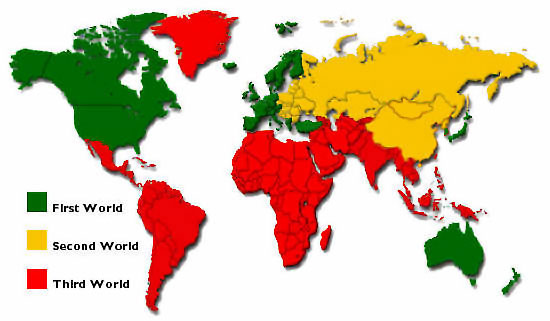
3) In the second third of our course, we have discussed the Cold War construction of “The Third World.” How, why, and in what terms did U.S. policy makers construct the idea of a “Third World”? What type of policies did the particular construction lead to? How did nations defined as being in the Third World use the construct to their own ends? How did these competing uses and definitions collide?


4) A theme we have continued to deal with throughout the second third of the course is the way in which history has often been invoked as a way to take a particular action internationally. In what ways has the production of historical narrative been used to further foreign policies? In what ways has the production of historical narrative been used to argue against certain foreign policies? What does such production say about the nature of memory? What does such production say about the role of the historian in foreign policy? How can the notion of the “end” of a particular historical period lead to new international actions?


5) A theme we have returned to throughout the second third of our course is the role of elite “experts” in the making of foreign relations. What has been the primary role of “the expert” in making foreign policy? Besides academic expertise what other types of expertise have been marshaled in support of U.S. policies? How have notions of foreign policy “expertise” changed over time? How have various “experts” worked to define domestic politics through foreign relations?


6) Have you been thinking a lot about something else that is not captured by one of these questions? Would you rather write an essay that explores your own idea? If so, then develop an argument of your own for this essay. If you choose this option, be sure to discuss your essay in advance with Jason.


OPTION #2: Book Review


REQUIREMENTS:

Length: A typed review between 1200 and 1800 words.

Source material: Melani McAlister’s Epic Encounters

Due: Beginning of November 18th class.


In this part of our course, you are reading the prefaces, the introduction, chapter 1, and chapters 3 through 5 of Melani McAlister’s Epic Encounters: Culture, Media, & U.S. Interests in the Middle East since 1945. Use this reading to write a book review of the book.


Guidelines for the review:


Although I discuss the review in terms of “sections” do not actually have section headings. Instead, write your review as a cohesive whole which transitions from section to section using the topic sentences of paragraphs, not section headings.


In the first section, identify the argument of the book. Why do you think the author is writing? What, specifically, is the argument she is attempting to convey? In the second section summarize the book. What do its chapters contain? How is it organized? What historical evidence does the author use to support the argument? How do the chapters flow from the argument McAlister is making? In the third section analyze the strengths and weaknesses of the book. Where does it fall short? What is particularly persuasive? What is missing? Finally, in the fourth section, place the book within the context of the course. How does the book fit with the lectures and discussions? What does it add to our understanding of the construction of American history? What documents or articles are in conversation with McAlister and in what ways?


Writing a good book review is extremely challenging and will require a considerable amount of reflection on your part. You will find that taking notes, marking your text while reading, and participating in class discussion over the book will greatly help you to write a good review. Finally, please do not be tempted to read published reviews of the book. Boyd and I have read them all and plagiarism will result in and “F” for the assignment.

Tuesday, October 28, 2008

10/28 and 10/30 Lecture: The War in Southeast Asia

Argument: I want to argue today that U.S. intervention into Southeast Asia (Vietnam and later Cambodia) occurred because of the confluence of two narratives of foreign relations we have been discussing since our World War I class:

  • Anti-colonial nationalism: As we discussed, the World War I created two competing anti-colonial nationalist discourses which would be taken up by nations vying for their independence from colonial powers—Wilsonian self-determination and communist anticolonialism. The failure of the latter would lead many nationalist leaders (like Ho Chi Minh in Vietnam) to take up the latter.
  • The Cold War binary and “domino theory”: The world wide binary between communism and freedom/democracy—accepted by all U.S. policy-makers—encouraged seeing all nationalist struggles throughout the “Third World” as part of the larger struggle between the U.S. and the Soviet Union. It was assumed that if one country anywhere was allowed to fall to communism that other countries around would fall as well

The confluence of these two narratives—the first accepted by Vietnamese Communists and the second accepted by U.S. policy makers—created the descent into war.


Evidence:


1) Vietnam’s nationalist/anti-colonialist past

a) 200 B.C. to 938 A.D. – Colony of China

b) 950-1859 – Independent

c) 1867 – French officially colonize and long war for independence begins

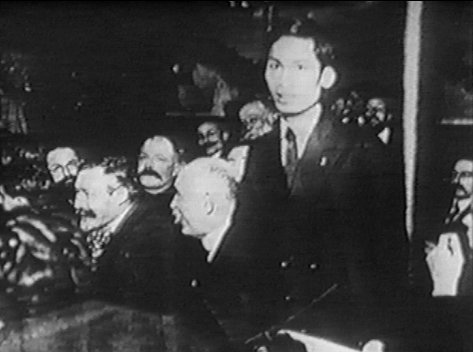
d) 1919 – As Wilson lobbies for 14 Points in France – Ho Chi Minh tries to present Wilson list of French abuses in Vietnam and to lobby for self-determination; fails and joins CP b/c of its fighting for colonial independence mvmts. (look at DOCUMENT)

e) 1930-1: French brutally suppress peasant rebellion in Vietnam

f) 1940-1: Japan takes over Vietnam but French collaborators left in charge

g) WWII: From China and then Vietnam Ho effectively allies with U.S. and organizes resistance against Japan

h) 1945: Ho organizes Democratic Republic of Vietnam with capital in Hanoi

i) 1945-1954: Guerilla war with France as FDR doesn’t want to hurt CW alliance with France/GB by pushing for Vietnamese independence at Yalta


2) The Cold War lens takes over as a Vietnam under a communist Ho is seen as a possible “domino” by all U.S. presidents from Truman to Nixon

a) Truman Administration

i) Ignores entreaties from Ho asking for continued relationship with U.S. if push made for independence

ii) $150 million to France for use in their Vietnam War along with military advisors

iii) Between 1945 and 1954, the U.S. gives $2 billion of the $5 billion that France spends on the war – seen through the lens of the Truman Doctrine

b) Eisenhower Administration

i) July 1954: France signs peace treaty with Ho; est. temporary North/South divide;

ii) Ike disregards treaty, backs Ngo Dinh Diem in South and purges rest of French influence

iii) 1955: U.S. thwarts unification election b/c obvious Ho would win; division remains and National Liberation Front (NLF/Vietcong) springs up in South

c) Kennedy Administration

i) Bay of Pigs, Berlin Wall in 1961, Cuban Missile Crisis and Khrushchev’s rhetoric about supporting wars of national liberation heighten seeing Vietnam through CW lens

ii) Green Berets and more advisors to Diem in South and now to Laos; Oct. 1961 intel. Estimate: 17,000 Vietcong in South who are dug in; (today)

iii) November 1963: Diem overthrown in coup after brutal repression of Buddhists and communist sympathizers; Kennedy assassinated – what would he have done?

d) Johnson Administration

i) NLF and North look for coalition govt. after coup, LBJ has none of it – needs to prove CW credentials and taking advice from “Wise Men”

ii) 8/4/1964 – Gulf of Tonkin produces 8/7 Resolution (416 to 0 in House, 88 to 2 in Senate) which widens war; DISCUSS

iii) 1964 election: portrays Goldwater as warmonger to win in landslide

iv) March 1965: Operation Rolling Thunder

v) April 1965 – DISCUSS SPEECH

vi) Escalation along with escalation of deaths

vii) VIEW AND DISCUSS FOG OF WAR: Chapters 14, 17-20, 23-25; DISCUSS NEXT CLASS

viii) Crisis of 1968

• Tet Offensive (1968) – disillusions many Americans (including Johnson) who thought the war was being won and who thought S. Vietnam was secure against North and VC

• Tet combined w/ unpopularity among antiwar Dems pushes Johnson to not seek 2nd term; Antiwar students flock to campaigns of Eugene McCarthy and Robert Kennedy

• King is killed, followed by Kennedy, McCarthy loses nomination to Hubert Humphrey (pro-war until late in election)

• Crisis at the 1968 DNC – anti-war demonstrators beaten by Chicago police; plays into Nixon’s campaign theme of “law and order” which seeks to connect the foreign and domestic “threats”

e) Nixon Administration

i) Despite antiwar sentiment (or perhaps in part because of) Nixon continues and widens war while drawing down forces; doesn’t want to “lose a Cold War battle” either

• DISCUSS “Silent Majority” speech: What is Nixon’s justification to continuing the war? How does it compare and contrast to LBJ’s as outlined in the first speech? What is the “silent majority” as outlined by Nixon? How does this “majority” play into his argument for continuing the war? How does he characterize opposition to the war? How does Nixon use protesters to his advantage in the speech?

• March 1969: secret bombing into Cambodia; April 1970: U.S. troops into Cambodia; leads to May 4, 1970 Kent State shootings when students stage protest for widening of war in secret


3) Nixon, Ford and Congress: Ending the war, but not the CW mentality which furthered it

a) Legacies

i) 58,000 U.S. dead, 3 million Vietnamese

ii) DISCUSS McMahon article


Monday, October 27, 2008

Reading introduction and questions for consideration (10/28 Readings)

1) Senate Debate of the Gulf of Tonkin Resolution: A brief excerpt from the Senate debate over the Gulf of Tonkin Resolution which would lead to the massive escalation of the war in Vietnam. The resolution passed unanimously in the House of Representatives and with only two dissenting votes in the Senate (Mr. Gruening and Mr. Morse).

  • What are the contours of the debate over presidential power in this excerpt?


2) LBJ, “Peace without Conquest”: Shortly after winning the 1964 presidential election in a landslide, Johnson gave this famous speech outlining his Vietnam policy and giving his rationale for the war. At the point he gives the speech, 400 U.S. soldiers had died in the war. On his leaving office in early 1969, some 35,000 more have been added to the death toll.

  • What is Johnson’s justification for the war? How does his justification compare to others we’ve read by presidents in the past?
  • Once again, in what ways does Johnson construct American history as justification for his policy?
  • How can we see his rhetoric engaging in the idea of “modernization” as described by Rostow?


3) Nixon address to the nation, 11/3/1969: Given a year after Nixon wins election to his first term, this is an outline of his Vietnam policy and his case for maintaining U.S. involvement in the region.

  • What is Nixon’s justification to continuing the war? How does it compare and contrast to LBJ’s as outlined in the first speech?
  • What is the “silent majority” as outlined by Nixon? How does this “majority” play into his argument for continuing the war? How does he characterize opposition to the war?


4) Nixon, “Peace with Honor”: The speech Nixon gives after a negotiated settlement for the end of the war. American combat troops would be fully gone two months later although all American personnel would not leave until mid-1975.

Thursday, October 23, 2008

"Domestic Containment" in the Early Cold War

Argument: Today we want to broaden our idea of Cold War “containment” policies to think about the idea of “domestic containment.” Although never articulated as such at the time, we will use “domestic containment” today to reference the political culture of the late forties and fifties in the United States. During this period, fear of communism was used to “contain” and limit political culture at home. This is not to say that the fear wasn’t genuine (particularly after the Soviets develop their own atomic bomb) but that it also had great domestic political usefulness for those who sought a contained domestic political order.


Evidence:


1) The most obvious form of domestic containment: domestic anti-communism used to contain left political activism at home

a) Not only draws off fear during Cold War but also off earlier fears of domestic subversion

i) WWI – think back to our class

ii) HUAC actually first established in 1938 by anti-New Deal Republicans

iii) WWII fear of espionage/subversion: Japanese Americans; Women (1, 2, 3, 4)

b) Labor (after gains during 30s/40s) becomes earliest target

i) 1946, Charles Swift, president of GE: “The problems of America can be captiously summed up in two words, Russia abroad and labor at home.”

ii) Taft-Hartley passage (1947): Gave NLRB vast new powers, including deeming communist purges of unions necessary to participate in union elections; made sympathy strikes and boycotts more difficult to carry out; allowed states to ban union shops; employers allowed new rights to intimidate workers during union elections; strikes could be postponed for 80 days by President in case of “National Emergency”

iii) Business unionism sets in as result; all new organizing virtually halts

c) After losses in 1946 midterm elections because of red-baiting, Democrats/liberals generally go hard-line anticommunist as we saw from Courdileone

i) Truman Executive Order 9835 initiates loyalty programs on 3.5 million civil service workers; 2900 resign, 300 dismissed

ii) Henry Wallace repeatedly red-baited in the 1948 Presidential campaign by Truman’s people

d) State based action: anti-subversive legislation; Minnesota example of DFL party (1945)

e) Domestic anticommunist campaigns often drew off homophobia (again think of Courdileone) and look at document; McCarthy example

f) McCarthyism as most visible element of domestic anticommunism

i) Wins election in 1946 midterm

ii) 1950 Wheeling, WV speech catapults to prominence

iii) Begins Senate Committee on Government Operations begins in 1952 when teachers, professors, Hollywood people, government officials all called to testify

iv) Tide turns in 1954 when McCarthy turns to the Army (famous exchange)

g) Contains Civil Rights movement/discourses of late 40s and 50s, but also enhances

i) DISCUSS Von Eschen


2) Domestic containment within a nuclear family suburban ideal

a) DISCUSS May reading

b) Government policies related to WWII and CW help these trends along

i) Homeownership under G.I Bill increases trends towards suburbanization and “traditional” nuclear families – baby boom and marriages explode after the war

• Not available to all soldiers: dishonorable and blue discharges, women in service have all sorts of barriers, men who couldn’t enlist

ii) Interstate Highway Act (1956)

c) Think back to “Kitchen Debate” and how homemaker becomes new ideal for white womanhood as suburbanization and domesticity become intimately tied to consumption and the Cold War

i) Often contrasted to Soviet women

ii) EDUCATIONAL/ADVERTISING FILM EVIDENCE: “Are You Ready for Marriage,” Frigidaire commercial, “In the Suburbs,” “Mother Takes a Holiday”


Monday, October 20, 2008

10/21 Reading Preview and Questions to Consider

You have two readings for tomorrow which—at first glance—might not appear to be related. However, I want you to try to put them into conversation with one another by thinking about how they both present narratives of competing “economic cultures” during the Cold War: one Soviet and one American. In other words, the broad question to consider is how each document—in its own way—shows both the United States and the Soviet Union developing theories regarding the “correct” economy and economic culture countries should be striving towards.


The first document is a segment of a debate between then Vice President Richard Nixon (VP under Eisenhower) and Soviet Premier Nikita Khrushchev at the American National Exhibit in Moscow in 1959. Often known as the “Kitchen Debate” this is one of the best examples of both sides presenting their competing visions of their competing economic cultures.


The second document is a section of the Introduction to Walt Whitman Rostow’s The Stages of Economic Growth: A Non-Communist Manifesto. Rostow was a high-profile economist who published this book (his most well known) in 1960. He would go on to occupy various positions in both the Kennedy and Johnson administrations and was a passionate advocate of the need to intervene in Vietnam. Thinking back to the Cuordileone reading, it is best to see Rostow as a Cold War Liberal through and through. Thus, this book—as is obvious by the title—was meant as a counterpoint to the Communist Manifesto. Cold War liberal policy makers and social science students of the time took Rostow’s theories to heart—particularly when thinking about how countries should “develop” and “modernize.” Although many academics saw his theories as being simplistic they gained wide resonance for Cold War liberals looking to offer a competing anti-communist narrative.


Questions to consider while reading:

  • I what way(s) do you see these readings overlapping? How do the three people we’re reading—Nixon, Khrushchev, and Rostow—present economic cultures of their respective countries?
  • How do we (once again) see foreign relations and domestic relations overlapping in these documents? That is, how do the domestic cultures of the United States and Soviet Union get positioned within foreign relations?
  • How do both documents show the use of History—particularly progressive, developmental narratives of History—to make their case? In this way, does this use remind you of the use of History in other readings from the semester?
  • How are the arguments of Rostow and Nixon similar?
  • How do colonization and decolonization fit into Rostow’s argument? What consequences might his views have when this thinking is applied to policies in the “Third World”—particularly as this category was conceived during the Cold War?
  • How is the category of “economic growth” viewed by Rostow?

Thursday, October 16, 2008

Solidifying Cold War Foreign Relations in the Fifties

Argument: The policy and worldview of NSC-68—implemented under Truman and solidified under Eisenhower—came to define Cold War U.S. foreign relations thereafter. Today, we’ll focus on the implementation and solidification of NSC-68 in the fifties, but it is important to keep in mind heading forward that it really is the defining document for Cold War foreign relations through Reagan’s presidency. Recapping the policy/worldview of NSC-68 from last class:

  1. Ideological battle: “free world vs. slavery,” “democracy vs. totalitarianism,” etc.

• This framing encourages seeing communism everywhere as attached to Soviet Union

• It encourages construction of a “Third World” which is “up for grabs” and of these countries being susceptible to the “domino theory”

• Encourages alliance-making on both sides

  1. Main policy advocated: Massive military buildup which requires increased taxes, subordinating other budgetary considerations

• still can create domestic economic boom through “military Keynesianism” (uses parallel to WWII)

• Situates military buildup in the context of an arms and technology race with the Soviet Union


Evidence:


1) Getting NSC-68 worldview and policy written and implemented under Truman

a) Writing of document brought about by two events

i) August 1949 – Soviets explode atomic device

ii) October 1949 – Mao Zedong communist revolution in China despite $3 billion in aid to thwart it; leads to U.S. non-recognition as official policy

b) Implemented in September 1950 because of North Korean invasion of South Korea (watch from 1:40 to 10:50) leading to Korean War (document collection)

i) Aide to Truman’s Sec. of State Dean Acheson: “We were sweating over it, and then—with regard to NSC-68—thank God Korea came along.”

ii) Acheson himself: dispatch of troops to Korea “removed the recommendations of NSC-68 from the realm of theory and made them immediate budget issues”

iii) Dept. of Defense budget in 1953: $52.6 billion up from $17.7 billion in 1950 (real money at the time); stays elevated after war just as suggested by NSC-68

iv) Alliances important as 16 nations fight under U.N. auspices

c) Other consequences of Korea

i) Japan moves to staunch U.S. ally and begins boosts post-World War II recovery

ii) Using U.N. as cover, Truman eschews war declaration, setting precedent for future presidents

iii) Mutually Assured Destruction (MAD) accepted by U.S. and Soviets for first time; thus Americans have first experience with a “limited war” (localized and without the use of atomic weapons) that can’t be “won” in the traditional sense.

iv) Cost: 2 mil North Korean civilians; 500,000 Northern soldiers; 1 mil. S. Korean civilians; 47,000 S. Korean soldiers; 148,000 Chinese dead; U.S.: 54,246 dead and 105,000 wounded; $20 billion spent by U.S. alone

v) Korean stalemate (among other issues) sends Truman’s popularity plummeting and sets stage for Eisenhower’s 1952 victory on promise of negotiating peace in Korea


2) Eisenhower’s presidency (as well as Soviet actions during it) solidifies the worldview and policy of NSC-68

a) psychological warfare with Voice of America, Radio Free Europe and Radio Liberty

b) CIA becomes major player in foreign policy

c) Stockpile of nukes from 1,200 to 22,229 in his presidency

d) Soviet Actions

i) October 4, 1957: launch of Sputnik space satellite

ii) Launch of first ICBM

iii) These actions lead to more worry (and thus more military monies) by U.S.


3) Although we can also see Ike’s presidency with more nuance

a) Limitedly engages with Khrushchev after Stalin dies in March 1953 and begins to offer less militaristic rhetoric in his speeches

i) Chance for Peace speech

ii) Atoms for Peace speech

iii) Farewell Address (Discuss)


If time, discuss Kennedy document and Cuordileone as preview for coming two weeks